


United States Supreme Court Annouces Strike Down of Trump Administration Tariffs
The United States Supreme Court annouced on Feb 20th that the Trump Administration cannot use IEEPA (International Emergency Economic Powers Act) to impose tariffs. "IEEPA does not authorise the president to impose tariffs," The supreme court found.
At this time, there has been no information provided regarding possible refunds or avenues to obtain those refunds. There are no actions we can take right now.
For the moment, entries will be processed with the IEEPA tariffs until CBP issues guidance and updates to allow entreies to go through without the IEEPA tariffs being added.
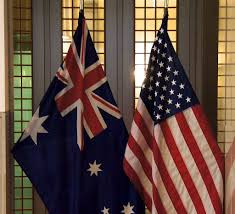
For Australia, the 10 percent tariff on Australian imports to the US, has been struck down. But the tariffs on certain types of products - including aluminium, steel, copper, wood, vehicles, auto parts and furniture, are unaffected. Mr Trump use different legislation to bring in those tariffs.
"Roughly speaking, what you should expect going forward is there will be tariffs on things rather than tariffs on countries," said Justin Wolfers, an economics professor at the University of Michigan and visiting professor at the University of NSW.
After the ruling, Mr Trump signed an order for a new 10 percent tariff on many foreign imports. He did so under a dection of trade law that allows him to impose tariffs of up to 15 percent for 150 days. "Other alternatives will now be used to replace the ones that the court incorrectly rejected," he told a press conference. "We have alternatives. Great alternatives."
US Trade Representative Jamieson Greer said those alternatives would include running fast-tracked investigations under Section 301 of the Trade Act.
It allows the president to impose tariffs on countries if investigations find those countries are treating the US unfairly.
Mr Greer said:
"We expect these investigations to cover most major trading partners and to address areas of concern such as industrial excess capacity, forced labour, pharmaceutical pricing practices, discrimination against US technology companies and digital goods and services, digital services taxes, ocean pollution, and practices related to the trade in seafood, rice, and other products.
"… If these investigations conclude that there are unfair trading practices and that responsive action is warranted, tariffs are one tool that may be imposed."
What does this mean for Australia?
The 10 per cent "baseline" tariff on Australian imports is gone.
It has been replaced by another 10 per cent tariff, imposed under Section 122 of the Trade Act.
But that law means it can only stay in place for 150 days.
Will tariff money need to be refunded?
This is unclear. But importers that have paid the tariffs are expected to take legal action to claw them back.
The court ruling did not give clear guidance on refunds.
But Justice Kavanaugh, in his dissenting opinion, addressed it:
"The United States may be required to refund billions of dollars to importers who paid the IEEPA tariffs, even though some importers may have already passed on costs to consumers or others.
"As was acknowledged at oral argument, the refund process is likely to be a 'mess.'"
Could Australian companies receive refunds?
Tariffs are paid by the companies that import a product, rather than those that export it.
So, companies operating in the US would be the ones eligible for a refund.
But some Australian exporters establish American subsidiaries to facilitate trade into the US.
"So, it's that subsidiary business that will be entitled to the refund," said Luke Branson, regional global trade leader for Oceania at Ernst & Young.
He said some Australian exporters had also made agreements with US importers to split tariff costs.
"Now, if an Australian exporter has shared some of that tariff cost through a commercial arrangement, they should obviously be seeking to recoup some of that."
EY Australia found Australian companies could be owed $1.4 billion in refunds.
How could refunds be given?
There are processes already in place for refunding tariffs charged in error.
They include "post summary corrections" and "protest" processes through US Customs and Border Protection (CBP).
"Businesses should assess which of these two buckets they best fall into and prepare their submissions accordingly in advance of further information from the US courts around how to deal with these refunds," Mr Branson said.
We are monitoring the situation and will provide updated as they become available.
Best Regards
The DDWL Team
Story by various sources including ABC News Australia
Read more here: https://www.abc.net.au/news/2026-02-21/explaining-the-us-supreme-court-takedown-of-trumps-tariffs/106372118